
How to Choose a Toilet Bowl in Singapore:
One-Piece, Wall-Hung & the S-Trap Check
How to choose a toilet bowl in Singapore: one-piece vs two-piece vs wall-hung, tornado flush, PUB WELS, and the S-trap or P-trap check before you replace an old toilet in your HDB, BTO or condo.
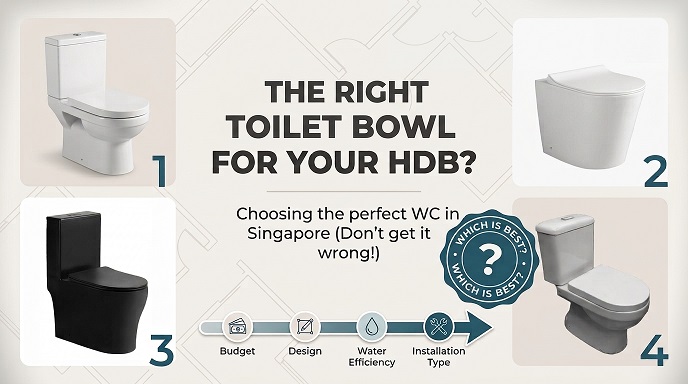
- Quick answer
- Toilet bowl types
- One-piece toilet bowl
- Two-piece or close-coupled toilet
- Wall-hung toilet bowl
- Flush systems: tornado or whirlpool flushing
- S-trap or P-trap: which one do you have?
- What is a sealed-back toilet bowl?
- Do not overlook the toilet seat
- Replacing an old toilet bowl during renovation or HIP
- One-piece vs two-piece vs wall-hung toilet
- FAQ
- S-trap or P-trap, how do I check?
- Is a one-piece toilet better than a two-piece toilet?
- Is a wall-hung toilet suitable for an HDB bathroom?
- What should I check before replacing my old toilet bowl?
- Ready to choose your new toilet bowl?
Choosing a toilet bowl may seem straightforward, but in Singapore the most important thing is not just how it looks. You need to make sure the new water closet matches your existing plumbing, especially the S-trap or P-trap arrangement.
This matters whether you are renovating an HDB flat, moving into a BTO, upgrading a condo bathroom, or replacing an old toilet bowl during an HDB Home Improvement Programme (HIP) upgrade.
Quick answer
Start by checking your existing trap type before choosing the design. An S-trap toilet bowl sends waste down through the floor and is the common arrangement in HDB and condo bathrooms. A P-trap can route waste to the wall or the floor, and is the one you need when the floor waste sits too close to the wall.
For the toilet itself, there are three main designs:
- One-piece toilet bowl: a sleek, easy-to-clean choice with the cistern and bowl moulded together.
- Two-piece or close-coupled toilet: a separate cistern and bowl, a practical and familiar choice.
- Wall-hung toilet bowl: mounted off the wall with a concealed cistern, leaving the floor clear for a modern look.
Also look for a suitable PUB WELS water-efficiency rating, and consider features such as tornado or whirlpool flushing and a soft-close seat. Do not buy on appearance alone: confirm your trap and setout first, and have a plumber remove the old toilet bowl and fit the new one.
Toilet bowl types
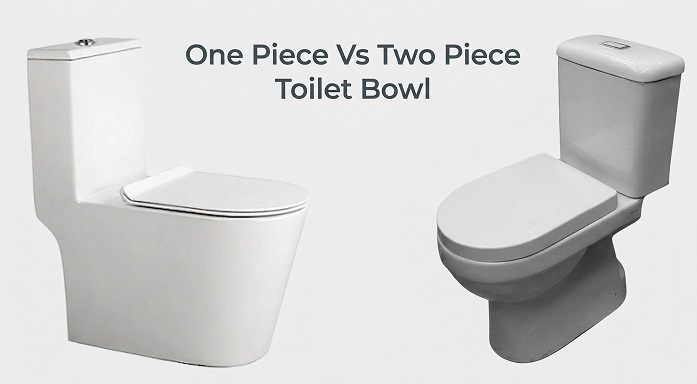
One-piece toilet bowl
A one-piece toilet has the cistern and bowl moulded together as one unit. With fewer joints and gaps, it has a clean, seamless appearance and is easier to wipe around.
Best for: homeowners who want a modern, streamlined toilet that is straightforward to clean. One-piece designs are the most common style in current bathroom ranges.
Two-piece or close-coupled toilet
A two-piece toilet has a separate cistern and bowl, the familiar design found in many homes.
Best for: homeowners who prefer a conventional setup or want a practical replacement for an existing close-coupled toilet. A separate cistern does not mean poorer flushing: a well-designed two-piece toilet flushes just as well as a one-piece. The main difference is the construction and appearance.
Wall-hung toilet bowl
A wall-hung toilet is mounted off the wall, with the cistern concealed behind the wall or within a supporting installation system.
Best for: modern bathroom renovations where a clean look and clear floor area are priorities. The clear floor underneath makes cleaning easier and can make a small bathroom feel less crowded. Do note that a wall-hung toilet needs the correct concealed cistern and supporting frame, so it is not a direct swap for every existing floor-mounted toilet.
Flush systems: tornado or whirlpool flushing
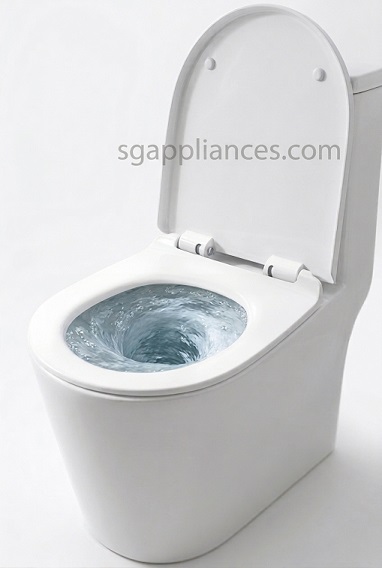
A tornado or whirlpool flush sends water swirling around the bowl rather than relying on an older rim-style flushing action. The swirling movement rinses more of the bowl surface and gives a thorough clean while using water efficiently. Many modern toilet bowls now use this style of flushing.
When comparing toilets in Singapore, also check the PUB Mandatory Water Efficiency Labelling Scheme (WELS). WELS gives water-efficiency ratings for regulated fittings, including dual-flush low-capacity cisterns and flush valves. The simple rule for a homeowner: check the WELS label rather than assuming a newer-looking toilet automatically uses less water.
S-trap or P-trap: which one do you have?
Before anything else, check how your current toilet sends the waste away. You do not need to measure anything.
- An S-trap sends waste down through the floor, the most common setup in HDB and condo bathrooms.
- A P-trap can route waste to the wall or the floor, and is the one you need when the floor waste sits too close to the wall.
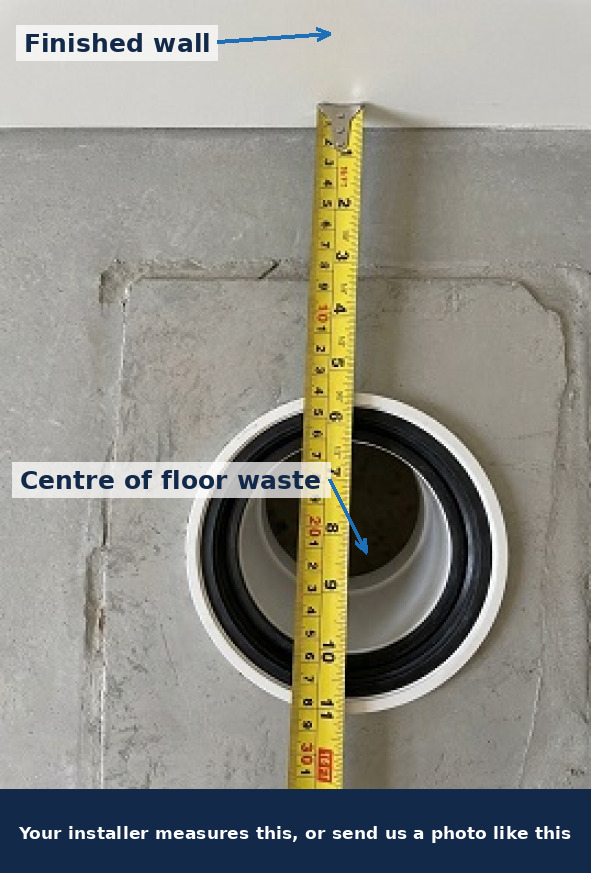
Look at your toilet, or the diagram above, and see which matches yours. Not sure? Two easy ways:
- Snap a photo of the base of your toilet and the waste pipe and WhatsApp it to us, and we will match it for you.
- Or ask your installer. The plumber fitting your new toilet bowl will know your trap type and setout.
The exact setout (the distance from the wall to the waste, commonly around 150mm or 250mm on an S-trap) decides which toilet bowl fits. Leave that measurement to us or your plumber so it is done right the first time.
What is a sealed-back toilet bowl?
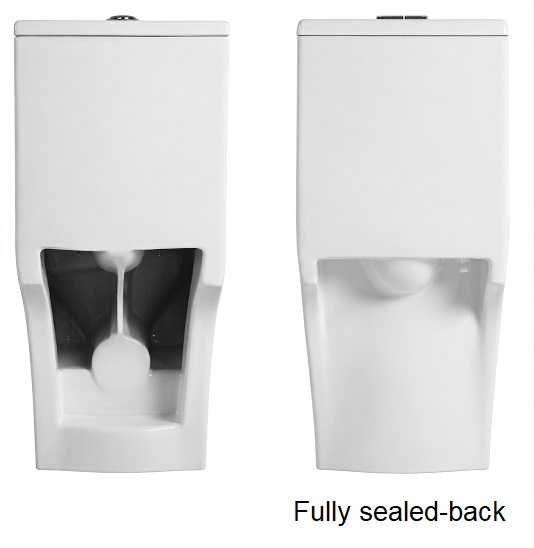
For an S-trap toilet, a sealed-back design covers the rear of the bowl rather than leaving an open gap behind it. This prevents stagnant water and dust from collecting behind the toilet and gives a neater, easier-to-clean finish. It is especially useful in a compact HDB or BTO bathroom where the toilet sits close to other fittings.
Do not overlook the toilet seat
The toilet seat is used every day, so small features make a real difference. A soft-close seat lowers gently instead of dropping suddenly, which is quieter and reduces wear on the seat and bowl.
Many Singapore homeowners also add a hand bidet spray beside the toilet. If you are renovating, check the position of the water connection and the surrounding space so the spray can be used comfortably. Under HDB's EASE 2.0 scheme, a bidet spray next to the pedestal pan is also one of the senior-friendly items available. See our guide on choosing a bidet sprayer.
Replacing an old toilet bowl during renovation or HIP
Replacing an old toilet bowl is common during a bathroom renovation, particularly in older HDB flats. It can also form part of an HDB upgrading programme: under the Home Improvement Programme (HIP), the optional toilet upgrading may include replacing an existing squat or pedestal pan with a new pedestal pan, alongside other works.
Before you buy, check:
- Whether your existing toilet is S-trap or P-trap (see the section above, or send us a photo).
- The setout if it is an S-trap (around 150mm or 250mm). Your installer can confirm this, or send us a photo and we will match it.
- That the new toilet bowl fits your setout. We are happy to check this for you.
- The available bathroom space and toilet position.
- The WELS water-efficiency label.
- Whether the toilet seat and other fittings are included.
- Arranging a plumber to remove the old toilet bowl and fit the new one. We can arrange ours.
HDB also provides renovation guidelines for the replacement of toilet pans and sanitary plumbing works, so HDB homeowners should check the applicable requirements before renovation begins.
One-piece vs two-piece vs wall-hung toilet
| Toilet type | Main feature | Best for | Things to consider |
|---|---|---|---|
| One-piece | Cistern and bowl moulded together | Sleek look and easier cleaning | Usually a larger, heavier single unit |
| Two-piece / close-coupled | Separate cistern and bowl | Practical, conventional replacement | More joints and surfaces to clean |
| Wall-hung | Bowl mounted off the wall, concealed cistern | Modern look and easy floor cleaning | Needs a concealed cistern and supporting frame |
The best type depends on your bathroom, plumbing and renovation plans. Choose the design after confirming that the toilet can be installed correctly.
FAQ
S-trap or P-trap, how do I check?
Look at where the waste goes. An S-trap sends waste down through the floor, while a P-trap can route waste to the wall or the floor. In Singapore, S-traps are common in HDB and condo bathrooms. If you cannot tell, send us a photo of your toilet and waste pipe, or ask the plumber who will install it. Leave the exact setout to us or your installer.
Is a one-piece toilet better than a two-piece toilet?
They have different advantages. A one-piece toilet has a seamless design with fewer joints and is easy to wipe clean. A two-piece toilet has a separate cistern and is a practical, conventional choice. A two-piece toilet does not flush less effectively: both flush well when properly designed.
Is a wall-hung toilet suitable for an HDB bathroom?
It can be, where the bathroom has the necessary arrangement for a concealed cistern and wall-mounted bowl. It is not automatically a direct replacement for a floor-mounted toilet, so the plumbing, supporting frame and concealed cistern need to be planned as part of the renovation.
What should I check before replacing my old toilet bowl?
Start with the trap type and setout: confirm whether yours is S-trap or P-trap (send us a photo if unsure). Then check the WELS label, the dimensions, the flush system and the seat features. Have a plumber remove the old toilet bowl and fit the new one so it is properly connected.
Ready to choose your new toilet bowl?
Browse our range of toilet bowls and water closets in S-trap and P-trap, one-piece, two-piece and wall-hung, PUB WELS approved. Not sure which fits your bathroom? Send us a photo of your existing toilet and waste pipe and we will help you match it, then arrange delivery and installation.
Planning the rest of the bathroom? See our guides on choosing a wash basin and wall mirrors and mirror cabinets, or browse bidet sprays and shower sets.

Product tips and buying guides from the SG Appliances team.