
How to Choose a Bathroom Wash Basin in Singapore:
Countertop vs Undermount vs Wall-Hung
A simple guide to countertop, undermount and wall-hung wash basins, and how to pick the right type for your HDB, BTO or condo bathroom.
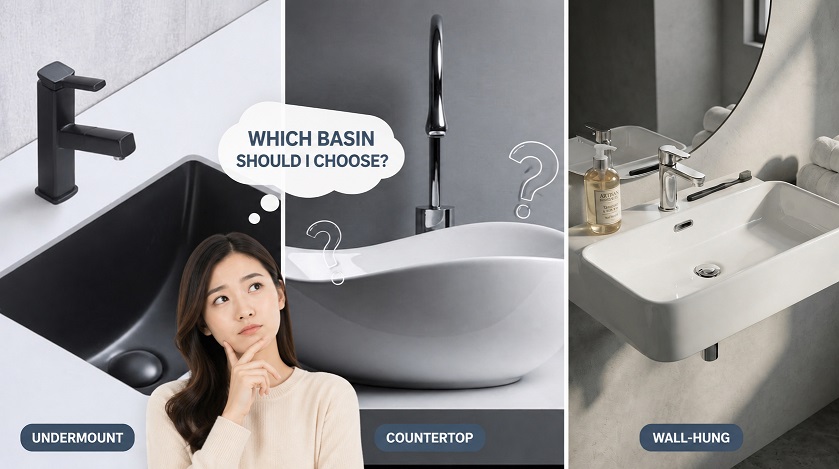
- Quick answer: the 4 main types at a glance
- Countertop (above-counter / vessel) basin
- Pros
- Cons
- What tap it needs
- Who it suits
- Undermount basin
- Pros
- Cons
- Countertop material compatibility
- Who it suits
- Wall-hung basin
- Pros
- Cons
- Wall support note
- Who it suits
- How to choose by bathroom size
- HDB common toilets & powder rooms (compact spaces)
- Family & master bathrooms (standard to spacious)
- Matching the basin with a cabinet, tap, and mirror
- Comparison table of wash basin types
- Frequently asked questions
- Which bathroom wash basin style is easiest to clean?
- Can I install an undermount basin on a laminate countertop?
- How high off the floor should a wash basin be installed?
- Are wall-hung basins safe for HDB walls?
- Ready to find your ideal basin?
Renovating a bathroom in Singapore involves balancing limited space with daily practicalities. Whether you are redoing an older HDB flat, collecting the keys to a new BTO unit, or upgrading a condo ensuite, picking the right bathroom wash basin is one of the most important decisions you will make.
The basin sits at the heart of your daily routine. It needs to handle morning rushes, withstand tropical humidity, and fit smoothly within your floor plan. With several mounting styles available, deciding between a vessel, undermount, or wall-mounted setup can feel overwhelming. This guide breaks down the four main mounting options, their practical pros and cons, and how to match a wash basin Singapore homeowners can rely on for years to come.
Quick answer: the 4 main types at a glance
If you are in the middle of space planning and need a quick reference, here is how the primary basin styles compare:
- Countertop (vessel) basin: best for modern, hotel-style master bathrooms with plenty of counter space.
- Undermount basin: best for busy family bathrooms prioritising seamless cleaning and maximum counter utility.
- Wall-hung basin: best for compact HDB toilets, powder rooms, or minimalist open-floor designs.
- Semi-recessed / pedestal basin: best for narrow vanities or traditional layouts where depth is limited.
Countertop (above-counter / vessel) basin
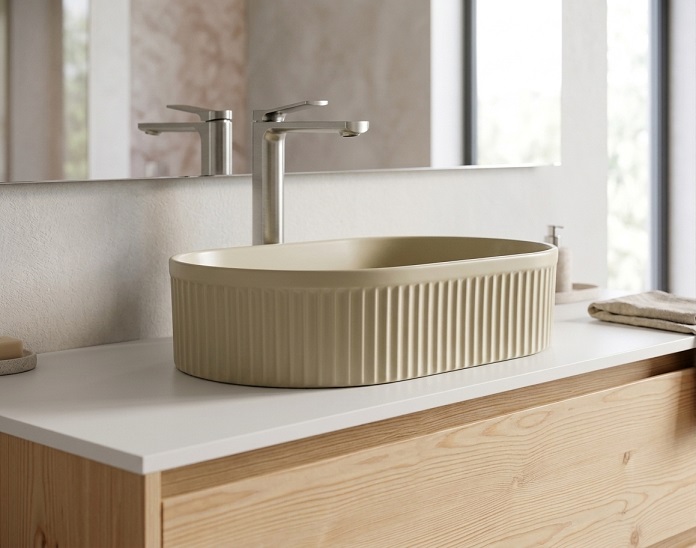
A countertop basin sits directly on top of a flat vanity unit or counter surface, creating an eye-catching focal point.
Pros
- Striking visual appeal: gives any master bathroom an instant luxury hotel look with distinct organic, rectangular, or round silhouettes.
- Simple installation: requires only a single drainage cut-out in the vanity top rather than a complex recessed rim.
- Deep basin options: because the bowl sits above counter level, you often get generous depth without losing storage inside the cabinet below.
Cons
- Extra cleaning effort: dust and water splash into the joint where the base meets the countertop surface, requiring regular wiping around the perimeter.
- Height considerations: the rim sits higher than the cabinet level, which can make daily washing awkward for young children if the cabinet is not built lower.
What tap it needs
Countertop models usually require a tall (extended) basin mixer mounted directly to the counter surface behind or beside the bowl. Alternatively, you can pair them with a wall-mounted tap fixture. Standard short-spout basin taps will not clear the elevated rim.
Who it suits
Ideal for homeowners focused on creating a feature bathroom, especially in master bedrooms where counter space is generous and heavy daily mess is minimal.
Explore options: Countertop Basins
Undermount basin
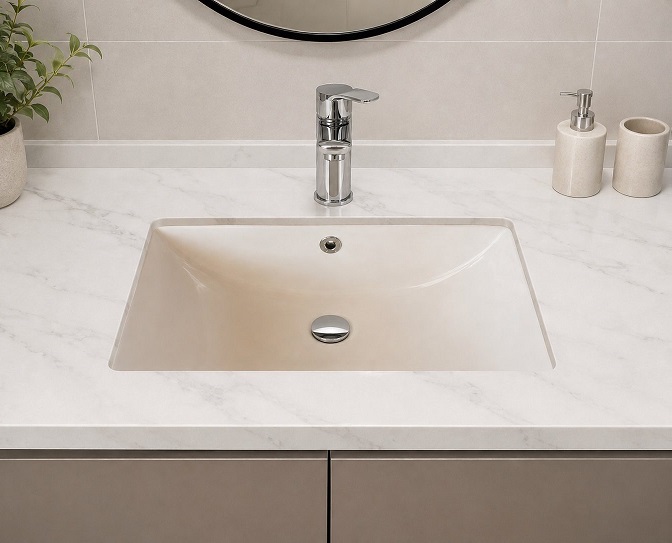
An undermount model is installed underneath the countertop cut-out so the sink rim is completely hidden below the solid surface.
Pros
- Effortless cleaning: water, soap foam, and spilled toothpaste can be swept straight off the counter into the sink with a sponge in one easy motion.
- Maximised surface area: leaves the entire top surface free for vanity trays, hand soap pumps, and grooming essentials.
- Clean visual profile: delivers a continuous, minimalist aesthetic that keeps the focus on your vanity countertop material.
Cons
- Higher total setup cost: precision fabrication and edge-polishing are required for the countertop cut-out.
- Loss of internal cabinet space: the bowl hangs lower inside the cabinet structure, reducing storage room for bulky cleaning supplies.
Countertop material compatibility
Because the edge of the cut-out remains exposed to water constantly, undermount models must be paired with non-porous, water-resistant solid surfaces like quartz, sintered stone, or natural granite. Avoid wood or high-pressure laminate tops here, as water seepage will cause the core materials to swell and delaminate over time.
Who it suits
Perfect for busy family bathrooms where quick, daily cleaning is the top priority and multiple family members share the vanity area.
Explore options: Undermount Basins
Wall-hung basin
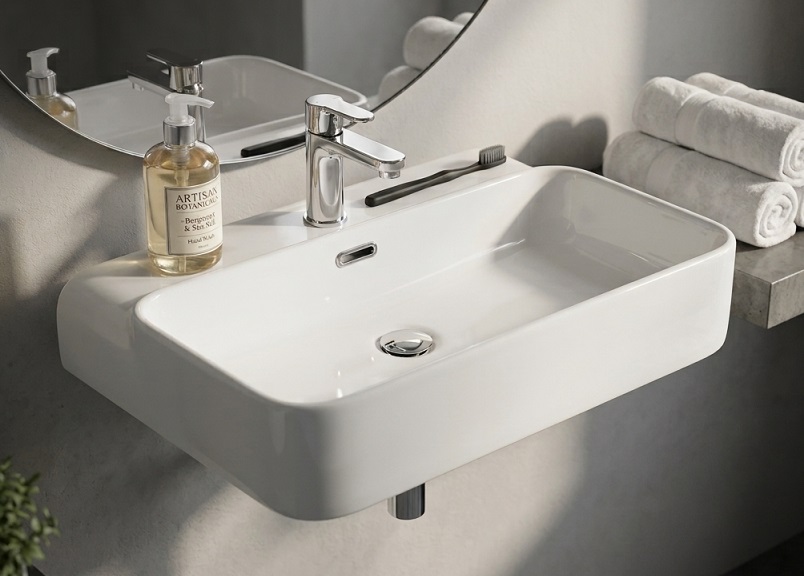
A wall-hung basin attaches directly to the wall with mounting bolts, leaving the floor area underneath completely open.
Pros
- Space-saving for small HDB toilets: keeps the floor area visible, instantly making tiny 3-room or 4-room HDB bathrooms feel larger and brighter.
- Easy floor maintenance: allows you to mop and scrub floor tiles right up to the wall trap without negotiating cabinet legs or bases.
- Flexible mounting height: can be fixed at any custom height to suit family members, making it comfortable for tall individuals or accessible setups.
Cons
- No built-in storage: lacks an integrated cabinet to hide toilet rolls, extra shampoo bottles, or cleaning agents.
- Exposed pipework: requires a neat bottle trap (usually in chrome, black, or brass finishes) since the plumbing is visible underneath.
Wall support note
Wall-hung basins rely on solid structural support. Fixing directly into concrete or solid HDB brick walls provides maximum stability. If you are mounting onto a lightweight partition or stud wall, internal plywood backing or structural reinforcement is necessary before tiling.
Who it suits
Great for compact common toilets, guest powder rooms, or minimalist homeowners who prefer uncluttered, open-floor layouts.
Explore options: Wall Hung Basins
How to choose by bathroom size
Matching the wash basin to your floor plan dimensions prevents cramped walking paths and ensures comfortable daily movement.
HDB common toilets & powder rooms (compact spaces)
- Typical width: under 500mm to 600mm.
- Best choice: wall-hung or slim semi-recessed basins.
- Why: in compact layouts, a deep cabinet can block the shower screen or interfere with the toilet door swing. A slim wall-hung unit keeps the room feeling open while retaining essential washing functions.
Family & master bathrooms (standard to spacious)
- Typical width: 600mm to 900mm and above.
- Best choice: undermount or countertop basins integrated with Basin Cabinets.
- Why: larger bathrooms benefit from consolidated storage. An undermount basin provides effortless counter cleanup for daily family use, while a countertop vessel basin adds a touch of resort-style luxury to an ensuite.
Matching the basin with a cabinet, tap, and mirror
Creating a cohesive bathroom space requires making sure your core fixtures work together seamlessly:
- Selecting the cabinet: if you need hidden storage for toiletries, pick a vanity built specifically for wet bathroom conditions (PVC or stainless steel cabinets perform exceptionally well in Singapore's humid climate). For a step-by-step breakdown on cabinet sizing and layout options, see our guide How to Choose the Right Bathroom Vanity.
- Choosing the right tap: match the tap height to the basin mounting type. Standard short-spout taps work best for undermount and wall-hung basins with built-in tap holes. Tall vessel taps or wall-mounted mixers are required for countertop bowls without integrated tap holes.
- Mirror alignment: keep your mirror or mirror cabinet width slightly narrower than or equal to the total width of the basin or vanity top. Centre the mirror over the basin bowl to maintain clean visual symmetry.
Comparison table of wash basin types
| Basin style | Best for | Storage potential | Cleaning difficulty | Counter material required |
|---|---|---|---|---|
| Countertop | Master bathrooms & luxury accents | High (inside vanity below) | Moderate (cleaning around base rim) | Any moisture-resistant top |
| Undermount | Busy family bathrooms & easy maintenance | Moderate (bowl occupies top drawer space) | Very easy (swipe-clean surface) | Quartz, granite, sintered stone |
| Wall-hung | Compact HDB toilets & powder rooms | None (requires wall shelves) | Very easy (floor underneath clear) | None (fixed to wall) |
| Semi-recessed | Narrow vanities with shallow counter depth | Moderate (slim cabinet storage) | Easy to moderate | Quartz, solid surface |
Frequently asked questions
Which bathroom wash basin style is easiest to clean?
Undermount basins are widely considered the easiest to maintain. Because the basin rim sits flush below the countertop line, water and crumbs can be wiped straight off the counter into the sink without catching along edges or silicone seals.
Can I install an undermount basin on a laminate countertop?
It is not recommended. Undermount cut-outs expose the raw inner rim of the countertop directly to water. High-pressure laminates or engineered wood cores can absorb moisture over time, causing swelling. Always pair undermount basins with solid, non-porous surfaces like quartz, sintered stone, or granite.
How high off the floor should a wash basin be installed?
Standard installation height for a wash basin in Singapore is typically between 800mm and 850mm from the finished floor level to the top rim. If your household is taller, raising it to 850mm to 900mm reduces back strain during daily use.
Are wall-hung basins safe for HDB walls?
Yes, provided they are anchored correctly. Solid HDB structural walls handle wall-hung basins with standard mounting bolts easily. If installing on a false wall or partition, ensure your contractor builds reinforced backing support inside the frame prior to tiling.
Ready to find your ideal basin?
Discover a wide range of designs, from space-saving wall-mounted units to modern vessel styles, by visiting our full collection of Wash Basins.

Product tips and buying guides from the SG Appliances team.