
Undermount vs Top-Mount Kitchen Sink in Singapore
Top-mount vs undermount kitchen sinks compared for Singapore homes, and why most of our sinks can be installed either way.
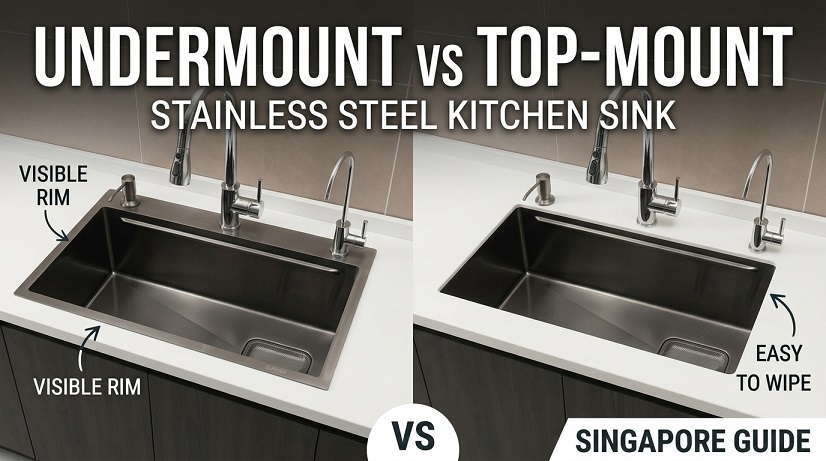
- Quick answer: which installation style is best?
- Top-mount (drop-in) kitchen sink
- Pros
- Cons
- Undermount kitchen sink
- Pros
- Cons
- The great news: most of our stainless steel sinks can be installed either way
- How your countertop material decides what is possible
- Solid, non-porous surfaces (quartz, sintered stone, granite)
- High-pressure laminate (HPL) & wood counters
- Cleaning & daily maintenance differences
- Comparison table: top-mount vs undermount
- Frequently asked questions
- Can the same sink really be installed as both top-mount and undermount?
- Will an undermount sink fall down under heavy loads?
- Which installation type is better for preventing mould?
- How do I check if my base cabinet will fit my chosen mounting style?
- Find your ideal kitchen sink today
When planning a kitchen renovation for your HDB flat, BTO unit, or condo, picking your kitchen sink is only half the decision. You also need to choose how it gets mounted into your countertop.
The debate between a top-mount sink (also called a drop-in sink) and an undermount sink comes down to cleaning habits, countertop materials, and installation preferences.
This guide breaks down the practical differences between both styles, how your choice of worktop affects installation, and why picking the wrong type is much harder to do than you might think.
(For a full overview of sink sizes, bowl counts, and accessories, read our main guide How to Choose the Right Kitchen Sink in Singapore.)
Quick answer: which installation style is best?
- Choose a top-mount (drop-in) sink if: you want a simpler, cost-effective installation, or if you are using wood, laminate, or budget-friendly countertop materials.
- Choose an undermount sink if: you prioritise effortless cleanup, want a sleek modern aesthetic, and are using a solid, non-porous countertop like quartz, sintered stone, or granite.
Top-mount (drop-in) kitchen sink
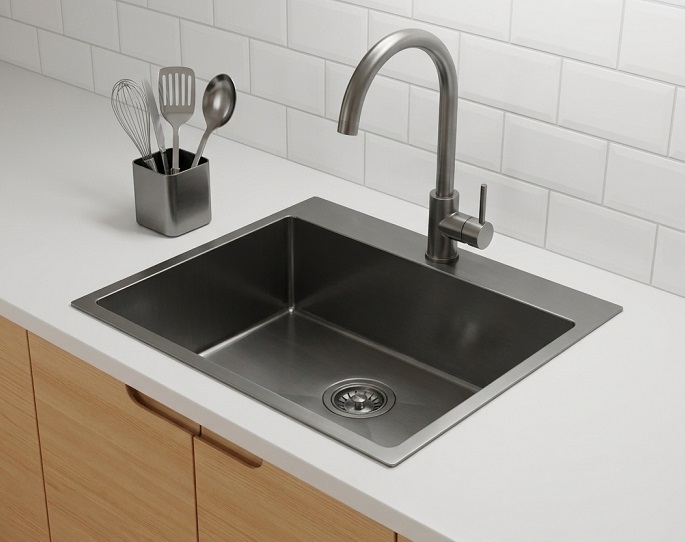
A top-mount sink drops directly into the countertop cut-out from above. Its rim rests flat on top of the counter surface, supporting the weight of the bowl.
Pros
- Versatile material compatibility: works with virtually any countertop material, including high-pressure laminate, solid timber, quartz, and solid surfaces.
- Simpler, cost-effective installation: requires a straightforward cut-out without specialised edge polishing, making carpentry and installation faster and less labour-intensive.
- Protects counter cut-out edges: because the stainless steel rim overlaps the counter edge, it shields the raw cut-out from direct impact and water ingress.
Cons
- The raised rim barrier: the outer rim sits slightly higher than the countertop, forming a small ridge. You cannot wipe water or crumbs directly from the counter into the bowl with a sponge.
- Perimeter silicone maintenance: the silicone sealant applied under the outer rim to prevent water leaks can trap grime and develop dark mildew over time in Singapore's humid climate, requiring periodic cleaning or resealing.
Undermount kitchen sink
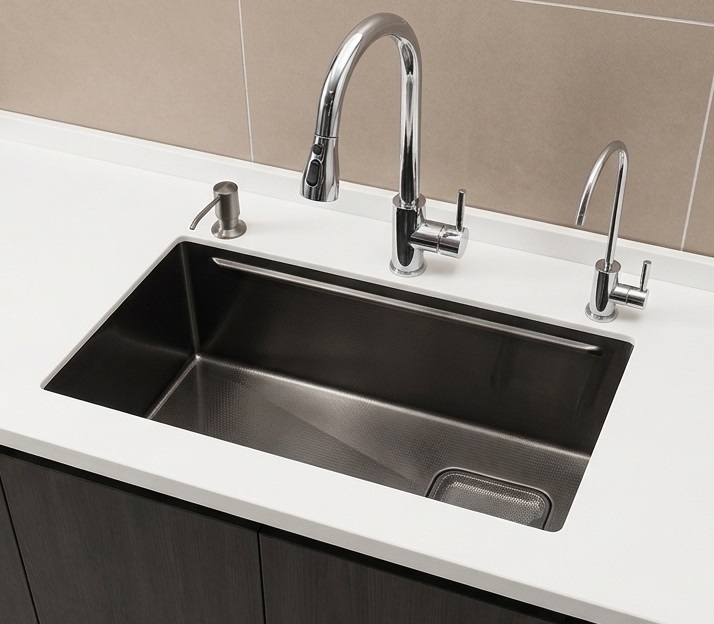
An undermount sink installs completely beneath the countertop cut-out. The sink bowl is secured to the underside of the counter with heavy-duty mounting clips and structural adhesive, leaving the finished edge of the countertop exposed.
Pros
- Effortless countertop cleanup: with no raised rim blocking your path, you can wipe spilled liquids, water droplets, and food crumbs straight off the counter directly into the sink in one continuous motion.
- Sleek, premium aesthetic: creates a clean, uncluttered visual line that showcases the texture and edge profile of your solid surface or stone worktop.
- Maximises usable counter space: eliminates the exposed rim width, giving you slightly more usable flat counter area around the sink perimeter.
Cons
- Requires water-resistant solid counters: cannot be used with laminate or engineered wood tops, as exposed cut edges will absorb water and rot.
- Higher fabrication effort: the inner edges of the countertop cut-out must be cut precisely, polished, and sealed by professional stonemasons or fabricators.
The great news: most of our stainless steel sinks can be installed either way
One common worry homeowners have is accidentally purchasing the "wrong" type of sink before confirming plans with their contractor or fabricator.
Fortunately, you do not have to stress over making a permanent decision upfront. Most of our stainless steel kitchen sinks feature a versatile dual-mount rim design.
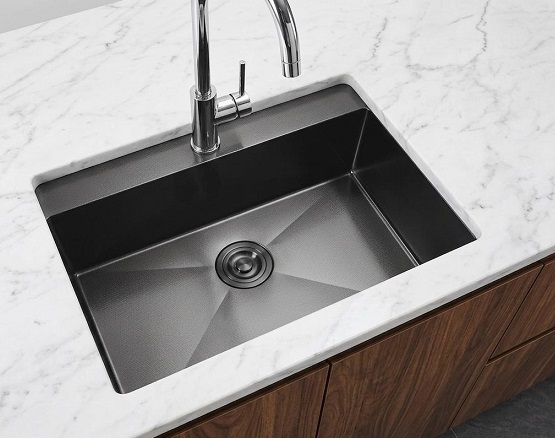
This means the exact same sink can be installed as either a top-mount or an undermount unit. The outer rim is engineered flat and rigid enough to sit neatly on top of a counter, while remaining wide and stable enough to be clamped securely underneath a quartz slab.
You can select your preferred sink design with confidence today, knowing that your carpenter or stonemason can finish the installation whichever way best matches your final countertop choice.
How your countertop material decides what is possible
While dual-mount sinks offer complete flexibility, your chosen countertop material sets the final rule on whether undermounting is safe:
Solid, non-porous surfaces (quartz, sintered stone, granite)
- Mounting options: both undermount and top-mount are fully supported.
- Why: these materials are completely waterproof throughout their core. Polishing the inner edge of the cut-out creates a beautiful, durable exposed rim that handles constant water splashing without deteriorating.
High-pressure laminate (HPL) & wood counters
- Mounting options: top-mount only.
- Why: laminate counters consist of a thin decorative surface sheet glued over a particle board or plywood core. If you undermount a sink, the exposed inner wood core will come into direct contact with water, causing the slab to swell, delaminate, and rot quickly. A top-mount rim seals this raw edge away from moisture completely.
Cleaning & daily maintenance differences
Keeping your sink area clean in a humid environment comes down to managing water trap points.
- Cleaning an undermount sink: daily sweeping is effortless. However, you should occasionally run a damp cloth or soft brush along the hidden joint where the underside of the stone meets the top of the sink rim to prevent soap scum buildup.
- Cleaning a top-mount sink: wiping down the inner bowl is simple, but you must pay extra attention to the outer silicone seal around the rim perimeter. Drying the counter edge with a microfibre cloth after dishwashing stops standing water from discolouring the sealant over time.
Comparison table: top-mount vs undermount
| Feature | Top-mount (drop-in) sink | Undermount sink |
|---|---|---|
| Countertop wipe-down | Water and crumbs caught by raised rim | Effortless (swipe straight into bowl) |
| Compatible counter materials | All materials (laminate, quartz, solid surface, wood) | Solid, non-porous materials only (quartz, granite, sintered stone) |
| Installation complexity | Simple & straightforward | Requires professional stone cut-out & edge polishing |
| Visual appearance | Classic, traditional look with visible steel rim | Modern, minimalist, seamless look |
| Edge protection | Steel rim protects counter edges from chips | Stone cut-out edge is exposed to heavy pot impacts |
| Dual-mount sink support | Yes (supported by most of our sinks) | Yes (supported by most of our sinks) |
Frequently asked questions
Can the same sink really be installed as both top-mount and undermount?
Yes. Most modern stainless steel sinks are engineered with flat, reinforced dual-mount rims. This flat rim geometry allows the sink to sit cleanly on top of a laminate counter or attach securely beneath a quartz or granite slab using under-counter mounting clips.
Will an undermount sink fall down under heavy loads?
No, provided it is installed correctly. Professional installers use a combination of heavy-duty under-counter support clips, epoxy brackets, and high-strength structural silicone sealant. When properly supported, an undermount sink easily holds a full basin of water and heavy cast-iron pots without sagging.
Which installation type is better for preventing mould?
Undermount sinks generally have fewer visible silicone lines exposed to surface light and standing water, making them slightly easier to keep mould-free on top. However, keeping either style clean simply requires wiping away standing water and pairing your basin with quality Kitchen Sink Faucets that do not splash excessively.
How do I check if my base cabinet will fit my chosen mounting style?
Both top-mount and undermount installations require sufficient internal cabinet clearance for the sink bowl and mounting hardware. To ensure your carpentry and sink match perfectly, follow the step-by-step sizing rules in our Kitchen Sink Size & Cabinet Cut-Out Guide.
Find your ideal kitchen sink today
Ready to choose a durable, flexible basin for your home? Browse our wide selection of dual-mount Stainless Steel Kitchen Sinks designed to fit any Singapore kitchen layout.

Product tips and buying guides from the SG Appliances team.