
SUS304 vs SUS316 Stainless Steel Kitchen Sink:
Which Do You Need?
A plain-English guide to SUS304 vs SUS316 stainless steel kitchen sinks: why 304 suits almost every Singapore home, and what matters more for daily use.
- What the numbers mean in plain English
- Why SUS304 is the best stainless steel for kitchen sink installations in most homes
- 1. Excellent moisture and humidity resistance
- 2. Hygienic and safe for food
- 3. Highly durable and easy to maintain
- When is SUS316 genuinely worth it?
- What actually matters more than 304 vs 316 for daily use
- 1. Steel thickness (gauge)
- 2. Sound-deadening rubber pads and undercoating
- 3. Surface coatings (nano coating)
- 4. Basin slope and drainage channels
- How to keep any stainless steel sink rust-free
- Comparison table: SUS304 vs SUS316
- Frequently asked questions
- Can a SUS304 stainless steel sink ever rust?
- How can I verify that a sink is made of genuine SUS304 steel?
- Is a 16-gauge or 18-gauge sink better?
- What is the difference between 18/10 and 18/8 stainless steel?
- Upgrade your kitchen with confidence
When shopping for a new kitchen sink, you will quickly notice grade numbers like SUS304 and SUS316 stamped across product listings. For homeowners preparing for a kitchen renovation, these codes can be confusing. Many naturally worry about rust, staining, and whether paying more for a higher number means getting a better product.
If you are trying to decide between a 304 vs 316 stainless steel sink, the quick answer is that SUS304 is the gold standard for almost every Singapore home. While SUS316 offers superior marine-grade protection, it is rarely necessary in a residential kitchen.
This guide breaks down what these steel grades mean in plain English, why SUS304 is usually the smarter choice, and what features actually matter more for daily kitchen performance.
What the numbers mean in plain English
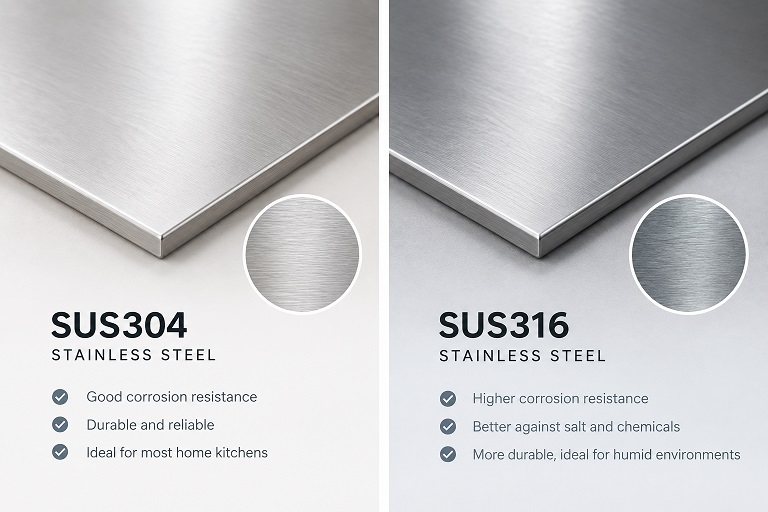
Both SUS304 and SUS316 are high-quality, food-grade stainless steel alloys. They contain chromium and nickel, which form an invisible protective layer on the surface of the metal that resists rust and staining.
- SUS304 (18/8 stainless steel): contains roughly 18% chromium and 8% nickel. It provides excellent resistance to corrosion, heat, and everyday kitchen acids like vinegar and citrus juice.
- SUS316 (marine-grade stainless steel): contains chromium and nickel, but adds about 2% molybdenum. Molybdenum boosts resistance to aggressive chlorides, salt water, and industrial chemicals.
In short, 316 steel was formulated to withstand severe conditions like ocean sea spray, coastal outdoor fixtures, and chemical processing plants. SUS304 was designed specifically for indoor food preparation, cookware, and household fixtures.
Why SUS304 is the best stainless steel for kitchen sink installations in most homes
For almost every HDB flat, BTO unit, condo, or landed property in Singapore, a SUS304 kitchen sink is the practical, reliable, and cost-effective choice.
1. Excellent moisture and humidity resistance
Singapore's high ambient humidity can accelerate metal oxidation, but SUS304 handles local indoor conditions with ease. It remains completely rust-free under normal daily use, whether you are washing dishes, rinsing vegetables, or draining boiling pasta water.
2. Hygienic and safe for food
SUS304 is non-porous, meaning bacteria, mould, and food residue cannot penetrate the surface. It is the same material used in commercial restaurant kitchens, food production facilities, and medical equipment.
3. Highly durable and easy to maintain
It resists chipping, cracking, and thermal shock from hot pans. A quick wipe with mild dish soap and a soft sponge keeps it clean and looking fresh for years.
When is SUS316 genuinely worth it?
Because SUS316 is often marketed as "premium" or "marine-grade," it is easy to assume it is automatically better for your home. However, being totally honest, most homeowners do not need to pay extra for 316.
SUS316 is only worth considering in very specific, specialised scenarios:
- Open-air seaside homes: properties located directly along East Coast Park, Sentosa Cove, or coastal areas where salt spray from the ocean enters open kitchen windows daily.
- Heavy commercial salt exposure: outdoor kitchens or commercial setups that handle raw seawater, continuous high-salt brine curing, or harsh chemical cleaning agents on a daily basis.
For a standard indoor residential kitchen, tap water and dish detergents do not contain the concentration of salt or aggressive chemicals needed to justify SUS316. Paying a premium for 316 will not make your sink look cleaner or last noticeably longer under ordinary household conditions.
What actually matters more than 304 vs 316 for daily use
Rather than getting caught up in grade numbers, focus on structural and design details that directly impact how noisy, durable, and practical your sink will be every day.
For a complete overview of bowl sizes, mounting styles, and layouts, explore our guide How to Choose the Right Kitchen Sink in Singapore.
1. Steel thickness (gauge)
The thickness of the steel sheet determines how sturdy the bowl feels. Thicker steel resists flexing, prevents deep denting from heavy stockpots, and reduces hollow drumming sounds when water runs. Look for sinks made with 1.0mm to 1.2mm thick steel (often listed as 18-gauge or 16-gauge).
2. Sound-deadening rubber pads and undercoating
Running water against bare sheet metal creates loud vibration noise. Quality sinks come equipped with thick rubber dampening pads stuck to the underside of the bowl, along with a sprayed anti-condensation undercoating. This deadens sound and stops moisture droplets from dripping into your under-sink cabinet.
3. Surface coatings (nano coating)
While standard brushed stainless steel works well, modern sinks often feature advanced protective finishes that repel water droplets, oil, and finger marks. To understand how water-repellent surface layers work in practice, read our guide Nano vs Normal Stainless Steel Kitchen Sink.
4. Basin slope and drainage channels
A good sink should drain completely without leaving stagnant puddles in the corners. Look for bowls designed with subtle X-shaped channel lines or a gentle bottom slope directed toward the waste outlet.
How to keep any stainless steel sink rust-free
Even the highest grade of stainless steel can develop surface spots if improper habits transfer rust onto its protective layer. Here is how to maintain a pristine surface:
- Avoid leaving cast iron sitting wet: never leave wet cast iron skillets, tin cans, or steel wool scouring pads sitting inside the basin overnight. The iron in those items will corrode quickly and leave reddish "transfer rust" spots on the sink surface.
- Rinse away bleach and acidic cleaners: strong chlorine bleach or concentrated drain cleaners can damage the protective chromium oxide layer if left sitting. Always flush the basin thoroughly with fresh tap water after cleaning.
- Skip harsh metal scourers: avoid scrubbing brushed stainless steel with coarse wire mesh. Use a non-scratch nylon sponge or microfibre cloth, wiping in the direction of the metal's grain.
- Keep air flow under the sink: allow damp cleaning rags to dry on a rack rather than crumpled inside your cabinet base to prevent trapped moisture around pipes.
Comparison table: SUS304 vs SUS316
| Feature | SUS304 stainless steel | SUS316 stainless steel |
|---|---|---|
| Alloy composition | ~18% chromium, 8% nickel | ~16% chromium, 10% nickel, 2% molybdenum |
| Corrosion resistance | Excellent for everyday tap water & food acids | Superior against ocean salt spray & harsh chemicals |
| Ideal environment | Standard HDB, BTO, condo & landed indoor kitchens | Seafront outdoor kitchens, coastal properties & industrial sites |
| Hygienic safety | 100% food-grade & non-porous | 100% food-grade & non-porous |
| Home recommendation | Recommended choice for almost all Singapore homes | Optional luxury; rarely necessary for normal cooking |
Frequently asked questions
Can a SUS304 stainless steel sink ever rust?
Under normal household conditions, SUS304 will not rust on its own. However, if wet steel wool, iron cookware, or harsh chemicals sit on the surface for extended periods, brown spots can form. These spots are usually "transfer rust" from the object itself rather than the sink metal, and they can be scrubbed away using a mild stainless steel cleaner.
How can I verify that a sink is made of genuine SUS304 steel?
Reputable brands stamp the "SUS304" label directly onto the steel rim or bowl wall. You can also purchase from established local suppliers who provide material certifications. While cheap magnet tests are popular online, genuine 304 steel can sometimes acquire slight magnetic properties around stamped corners during factory shaping, so stamping and supplier trust are better indicators.
Is a 16-gauge or 18-gauge sink better?
In wire gauge measurements, smaller numbers mean thicker steel. A 16-gauge sink (approx. 1.5mm thick) is thicker and sturdier than an 18-gauge sink (approx. 1.2mm thick). Both gauges are excellent for home kitchens, though 16-gauge offers slightly better sound dampening and dent resistance.
What is the difference between 18/10 and 18/8 stainless steel?
These numbers represent the percentages of chromium and nickel in the alloy. 18/8 contains 18% chromium and 8% nickel (standard SUS304), while 18/10 contains 10% nickel. Both offer outstanding corrosion resistance and durability for household sink applications.
Upgrade your kitchen with confidence
Looking for a durable, easy-to-clean basin for your home renovation? Browse our curated range of quality Stainless Steel Kitchen Sinks designed for Singapore households.

Product tips and buying guides from the SG Appliances team.